The 5 love languages: how to recognize them, and why everyone needs all five
The 5 love languages are words of affirmation, quality time, gifts, acts of service and physical touch. The idea is simple: each person has favorite ways of receiving love, and we often love others the way we would like to be loved. Recent research adds an important nuance: everyone needs all five, in different doses.
Knowing your own preferences and your partner's helps you get it right. It avoids giving lots of love that "doesn't land", and feeling short of love while your partner is actually trying. Here are the five languages explained simply, what science says about them, and concrete gestures for each one.
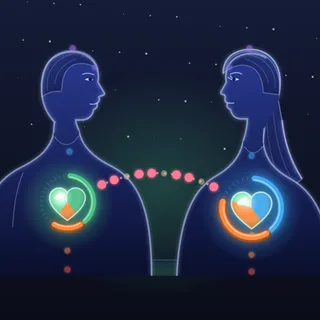
The 5 love languages at a glance
- Words of affirmation. A specific compliment, a sincere thank you, an "I'm proud of you". For some people, words matter enormously, and criticism hurts more too.
- Quality time. Full presence: phone put away, undivided attention, a real conversation. It is not about how much time you spend together, it is about attention.
- Gifts. Not necessarily expensive. Something that says "I thought of you": a flower you picked, a favorite treat, a little note slipped into a bag. It's the intention that counts.
- Acts of service. Practical help that lightens daily life: cooking dinner, handling a tedious errand, taking over when the other is exhausted. For these people, "I love you" is proven through actions.
- Physical touch. A held hand, a hug, a stroke on the back in passing. A reassuring physical presence, not only intimacy.
Where does the idea of love languages come from?
The concept comes from Gary Chapman, an American marriage counselor, in a book published in 1992 that became a huge success. Listening to couples, he noticed that many partners loved each other sincerely but "did not speak the same language". One gave gifts, the other wanted time together, and both felt misunderstood.
This model grew out of field experience, not scientific studies. It is a vivid framework, easy to use as a couple. It is useful to know what research says about it today.
What research says today
In 2024, a team of relationship psychologists (Emily Impett, Haeyoung Gideon Park and Amy Muise) reviewed the studies on love languages. Their conclusions are nuanced:
- Few people have just one language. Most appreciate several ways of being loved, often all five.
- Being "matched" is not enough. Studies do not clearly show that couples who share the same language are happier. The results are mixed.
- What matters most is attention to the other. Noticing what your partner needs, at that moment, and responding to it.
The researchers offer a telling image: love is less like a single language and more like a balanced diet. You need all the nutrients, even if you have favorite dishes. Your preferences show where to start, not which box you belong in.
How to find your love language (and your partner's)
Three simple questions help you see clearly:
- What do you complain about most often? "We never see each other" points to quality time. "You never help me" points to acts of service. The complaint often hides the need.
- What do you do spontaneously for your partner? We often give love in the form we would like to receive.
- What has hurt you the most? A forgotten birthday, a harsh remark, a lack of support in a hard moment: the hurt shows what matters.
The easiest way is still to talk about it, or to discover it by playing. In our free game Guess What Makes Me Feel Loved, each partner secretly picks what would mean the most to them in ten small everyday scenes, and the other tries to guess. You laugh, you surprise each other, and you come away with a clear idea of what makes you feel lovedr partner.
The 5 love languages and the chakras
At ChakraDuo, we link each language to a chakra. This link is our own reading, not a rule from the tradition or from Gary Chapman, but it helps you understand what each gesture nourishes:
- Words and the throat chakra: expression, daring to say what you feel and hearing it.
- Quality time and the heart chakra: presence, tenderness, a bond fed by attention.
- Thoughtful gestures and gifts and the third eye: sensing what will please, truly seeing the other.
- Acts of service and the root chakra: security, shared daily life, a solid base.
- Touch and the sacral chakra: contact, softness, the pleasure of being together.
When a language is missing for a long time, the matching chakra often weakens in the relationship. To see all seven chakras as a couple, read chakras for couples.
5 simple gestures, one per language
Try one this week, starting with your partner's favorite language:
- Words: every evening, tell your partner one specific thing you liked about their day.
- Quality time: an evening just for the two of you, phones in another room.
- Thoughtful gestures: bring home a small thing that reminded you of them, for no special occasion.
- Acts of service: take over a task that weighs on them, without being asked.
- Touch: a twenty-second hug when you meet again in the evening.
To go further, our 7 rituals to harmonize your couple's energy offer more ideas for two.
Mistakes to avoid
- Putting your partner in a box. "Your language is touch" can turn into a label. Needs change with the seasons of life: fatigue, stress, a new baby.
- Hiding behind your language. "It's not my love language" is no excuse for never saying a kind word. Everyone needs all five.
- Keeping score. Love is not an exchange of points. A gesture given to be paid back loses its warmth.
- Forgetting to ask. Guessing is good; asking is even better. "What would feel good to you right now?" is a question that never gets old. To ask it simply, see how to communicate better in a relationship.
And if tender gestures have been getting rarer for a while, read the small signs of a couple drifting apart too.
In short
- The 5 love languages: words, quality time, gifts, acts of service and touch.
- The idea comes from Gary Chapman (1992). It grew out of field experience, not scientific studies.
- Recent research adds nuance: everyone needs all five, and being "matched" guarantees nothing. Attention to the other matters more.
- Knowing your partner's preferences helps you get it right, without putting them in a box.
- One simple gesture per language, this week, is enough to start.
Frequently asked questions
What are the 5 love languages?
Words of affirmation, quality time, gifts, acts of service and physical touch. They are five ways of expressing and receiving love, described by Gary Chapman in 1992.
How do I find my love language?
Look at what you complain about most often, what you do spontaneously for your partner and what has hurt you the most. You can also play Guess What Makes Me Feel Loved together, a free game in ten scenes.
Can you have more than one love language?
Yes, it is actually the most common case. Most people appreciate several languages, often all five, with one or two favorites that can change over time.
Are love languages scientific?
Not originally: the model comes from a marriage counselor's experience. A 2024 review of the studies concludes that everyone needs all five languages and that attention to your partner's needs matters more than sharing the same language.
What if my partner and I have different love languages?
It is very common, and it is not a problem. Talk about it, learn to give in the form your partner prefers too, and keep nourishing all five languages.
Beyond the gestures, how strong is your bond? Take the test together: your 21 chakras, the 7 links between you, and practical advice to nourish your relationship.
How does ChakraDuo work? Discover the method.