Chakras for couples: the 7 energy links between you
In a couple, each partner carries seven chakras, and each chakra of one responds to the same chakra of the other. Together they form seven links: security, tenderness, decisions, love, communication, shared vision and meaning. When a link is tense, that's often where repeated arguments, misunderstandings and relationship fatigue begin.
This is the idea behind ChakraDuo: three connected maps, yours, your partner's and your couple's, to see where each of the 7 bonds is strong and where it is strained.
Looking at your relationship through the chakras isn't about finding someone to blame. It's about seeing where energy flows well between you, and where it gets stuck.
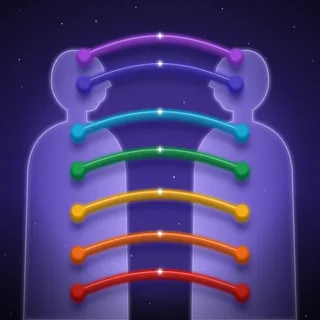
How two people's chakras respond to each other
Picture two columns of seven chakras facing each other, connected by seven cords. Each cord is a link:
- A relaxed link: you are both balanced on this chakra, energy flows.
- A tense link: one or both of you is out of balance. The link pulls, and the couple feels it.
- A tilted link: one is overactive where the other is underactive. The couple compensates… but one partner often carries more than the other.
The last case is the most misleading, because it can look like harmony. We dedicate an article to it: the false balance in a relationship.
The 7 chakras of your relationship
1. Root: feeling safe together
The couple's root chakra is the foundation: home, money, trust over time. Signs of tension: recurring money arguments, fear the other will leave, one partner controlling the whole budget. Together: review your finances once a month, calmly, with a shared goal, even a modest one.
2. Sacral: shared pleasure and tenderness
It governs desire, sensuality and the pleasure of being together day to day. Signs of tension: a fading intimate life, few light-hearted moments, living like roommates. Together: plan one simple pleasure every week (dancing, cooking, a bath), phones off.
3. Solar plexus: deciding and moving forward as a team
This is each partner's place in decisions. Signs of tension: one decides everything while the other follows in silence, or power struggles over every choice. Together: for your next decision, each of you gives an opinion before hearing the other's, then you decide together.
4. Heart: loving and letting yourself be loved
The heart link is tenderness, forgiveness, the balance between giving and receiving. Signs of tension: one gives a lot and burns out, the other protects themselves; resentments that don't fade. Together: every evening for a week, name one thing you appreciated about your partner that day.
5. Throat: communication comes first
Expressing what you feel and truly listening. Signs of tension: topics you avoid, hurtful words, feeling unheard. Together: a ten-minute weekly ritual where each person speaks without interruption, then the other rephrases before answering.
6. Third eye: seeing where you're going together
Shared intuition, a common vision of the future. Signs of tension: vague plans, no longer understanding each other without words. Together: picture yourselves together in five years, each of you writes it down, then compare without judging.
7. Crown: the meaning you give your story
Values, what's bigger than you, the freedom each partner keeps. Signs of tension: values drifting apart, feeling suffocated or alone in carrying the couple's meaning. Together: name the three most important values for your relationship, and one concrete action for each.
The 3 most common situations
Both hold back on the same chakra. For example, neither dares to bring up difficult topics (underactive throat for both). The relationship is calm… but unspoken things pile up. The key: create a protected moment to talk, even clumsily.
Both overflow on the same chakra. For example, two strong wills that each want to decide (overactive solar plexus for both). Arguments are frequent and heated. The key: split areas of decision, and learn to give in on what matters less to you.
One overflows, the other withdraws. This is the most discreet situation: the couple looks harmonious, but one partner carries the weight of two. Read our article on the false balance in a relationship to find out whether this split is chosen or endured.
In all three cases, the first step is the same: talk about it together, without looking for who's wrong.
What strains the links: the couple's backstage
Links don't tighten for no reason. Behind them there are almost always concrete causes, which we call the backstage: lack of sleep, work stress, an unevenly shared mental load, children, housing, too little time together, screens in the evening.
These causes weigh on each of you, and therefore on your links. A couple that argues "about money" is sometimes mostly arguing because both have been sleeping badly for months.
Tip: before working on a chakra, find together the backstage cause that weighs the most, and lighten it.
An exercise to start tonight
- Sit facing each other, hold hands, and breathe slowly together for two minutes. Our guided breathing exercise can set the pace.
- Each of you picks, among the seven links above, the one that feels most tense right now.
- Compare: did you pick the same one? If so, that's your priority. If not, listen to the other explain their choice without defending yourself.
- Choose one practice together for the week.
Relationship research shows that knowing your partner's inner world well (their worries, hopes, stresses) is one of the pillars of a strong relationship: psychologist John Gottman calls these "love maps" (The Gottman Institute). This exercise works in the same direction.
Frequently asked questions
What are chakras for couples?
A way of looking at your relationship through each partner's seven chakras and the seven links between them: security, tenderness, decisions, love, communication, vision and meaning.
Which chakra matters most in a relationship?
There isn't just one: the most important is the one whose link is most tense for you right now. The heart and throat, however, are often at the center of tensions.
Can we harmonize our couple energy if only one of us is interested?
Partly, yes: when one partner rebalances, the binding link already starts to relax. But the work is faster and more accurate together.
Do chakras replace couples therapy?
No. It's a tool for reflection. If tensions are strong or lasting, a couples therapist is the right person to see.
Want to see your seven links, chakra by chakra? Take the couple test: your 21 chakras (each of you, and your couple), the 7 links between you and three action plans, for each of you and for both of you.
How does ChakraDuo work? Discover the method.