Yoga poses for chakras: one simple pose for each chakra
Yoga connects body and attention, which makes it an excellent tool for balancing your chakras. Each chakra can be paired with a simple, beginner-friendly pose: mountain for the root, butterfly for the sacral, warrior for the solar plexus, cobra for the heart, supported fish for the throat, child's pose for the third eye, and corpse pose for the crown.
At ChakraDuo, each of these yoga poses for chakras is matched to one specific chakra: choose the pose for the chakra that most needs attention, rather than doing everything at once.
Hold each pose for 5 to 10 slow breaths. A full session of all seven poses takes about 15 minutes. To keep your breath steady, use our guided breathing exercise.
Before you start: go gently and never force. If you have pain, are pregnant, or have back or neck problems, ask a yoga teacher or your doctor for advice.
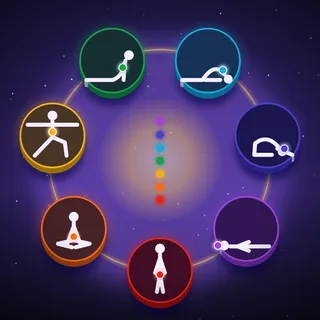
1. Root: mountain pose (Tadasana)
How: stand with feet hip-width apart, arms by your sides. Spread your weight across the whole sole of each foot. Lengthen your spine, relax your shoulders. What it brings: stability, a feeling of being well planted. It's the grounding pose. Depending on your state: underactive, imagine roots growing from your feet; overactive (need for control), let your body sway slightly before finding the center again.
2. Sacral: butterfly pose (Baddha Konasana)
How: sitting, soles of the feet together, knees opening toward the floor. Hold your feet, back long. You can gently flutter your knees. What it brings: opens the hips, an area where emotions are often said to "settle". Depending on your state: underactive, flutter your knees rhythmically; overactive (overflowing emotions), stay still and breathe slowly.
3. Solar plexus: warrior II (Virabhadrasana II)
How: legs wide apart, front foot turned out, front knee bent over the ankle. Arms stretched out horizontally, gaze over the front hand. What it brings: strength, determination, confidence. Depending on your state: underactive (indecision), hold it a bit longer; overactive (need to dominate), soften the pose and relax your face and hands.
4. Heart: cobra pose (Bhujangasana)
How: lying on your stomach, hands under your shoulders. As you inhale, gently lift your chest, elbows close to your body, without pushing hard on your arms. Shoulders away from your ears. What it brings: opens the chest, the opposite of the protective posture we adopt when we close off. Depending on your state: closed heart, open gradually while breathing into your chest; heart that gives too much, finish with child's pose to come back to yourself.
5. Throat: supported fish pose (Matsyasana)
How: lying on your back, a cushion or block under your upper back, head resting on the floor or on a second cushion. Arms relaxed. What it brings: opens the throat and chest, inviting full breaths. Depending on your state: underactive throat, add a soft sound on the exhale (an "aah" or humming); overactive throat (talking too much), stay silent and listen to your breath.
6. Third eye: child's pose (Balasana)
How: kneeling, sitting on your heels, fold forward and rest your forehead on the floor, arms along your body or stretched in front. What it brings: the contact of the forehead with the floor calms the mind. It's the ideal pose when thoughts race. Depending on your state: overactive (overthinking), stay longer with a long exhale; underactive (lack of vision), finish sitting with eyes closed, visualizing a goal.
7. Crown: corpse pose (Savasana)
How: lying on your back, legs and arms slightly apart, palms up, eyes closed. Stay 3 to 5 minutes, letting your whole body relax. What it brings: integrates the session, soothes, opens a feeling of unity. Depending on your state: underactive (loss of meaning), think of something that truly matters to you; overactive (escaping into spirituality), feel the weight of your body on the floor to stay grounded.
A 15-minute session for beginners
- 2 minutes of slow breathing, seated.
- The seven poses, from root to crown, 5 to 10 breaths each.
- Finish with 3 minutes of corpse pose.
Practiced two or three times a week, this session helps keep all seven chakras moving. If you already know which chakras are out of balance, give them more time.
Yoga as a couple
Some poses can be done together: back-to-back breathing, butterfly face to face holding hands, or a mirrored seated twist. It's a lovely ritual to harmonize couple energy (see our 7 rituals for couples).
Frequently asked questions
Which yoga pose unblocks the chakras?
Each chakra has its pose: mountain for the root, butterfly for the sacral, warrior for the solar plexus, cobra for the heart, fish for the throat, child's pose for the third eye, corpse pose for the crown.
How long should I hold each pose?
Five to ten slow breaths is enough to start. Always stay within what feels comfortable.
Is yoga enough to balance your chakras?
It's an excellent support, but it works best combined with concrete changes: sleep, stress, relationships. See our guide to balancing your chakras.
Do I need to be flexible?
No. These poses were chosen to be accessible. Adapt them with cushions and never force.
Which chakras deserve the most attention? Take the test: a map of your seven chakras and the practices that suit them.
How does ChakraDuo work? Discover the method.